The Cross on the Mat
By BRIAN CARSON
Consider the ritual. Before every match, Tanner Ingle does the same things in the same order, with the care of someone who understands the space between preparation and performance is sacred.
He walks out and prays. He returns to the mat, drops to one knee, and drags his finger across the canvas in the shape of a cross. Then he writes two letters. CS. Cam Sweigart. His hero. Gone too soon in a car accident. Still present. Tanner points to the sky. He steps to the line.
He’s thirteen, and he’s already learned what takes most people a lifetime to figure out: that what you believe, and who you carry with you, shapes everything that comes after.
Tanner came to wrestling the way a lot of things arrive in a young life: through a friend’s suggestion, a casual try-it-and-see moment. He went to an open mat. For two years, it was fun, something to do, a sport.
Then, in his third year, something clicked. He can’t fully explain it, which is the truest sign it was real. “I realized I loved it,” he said, “and wanted to get really serious about it.” When you hear a thirteen-year-old say that, and you can tell he knows exactly what it means, you pay attention.
What followed was a quiet dismantling and rebuilding of how he spent his time. He left behind the habit of moving between multiple clubs, looking for the best of everything, and committed instead to one place he could rely on, coaches who’d be there in the long run, not just for the big tournaments.
He pulled back from the small local events and started going to bigger competitions, the kind where a loss teaches you something. He replaced short practices with long ones, easier drilling with harder drilling, the comfort of familiar technique with the grind of getting better. “Really hard and consistent practice,” he said, with a plainness that makes it land.
His father, Ryan, keeps the family’s approach to the sport and to life distilled into a sentence. “Follow God and work hard,” he said. “The rest will fall into place.”
That sentence sounds easy. Living it means when Tanner dragged himself through practices that didn’t feel like progress, when the work was invisible, and the results hadn’t arrived yet, he kept going because the faith demanded it and the goals required it. The philosophy is simple. The application of it, day after day as a teenager, is anything but.
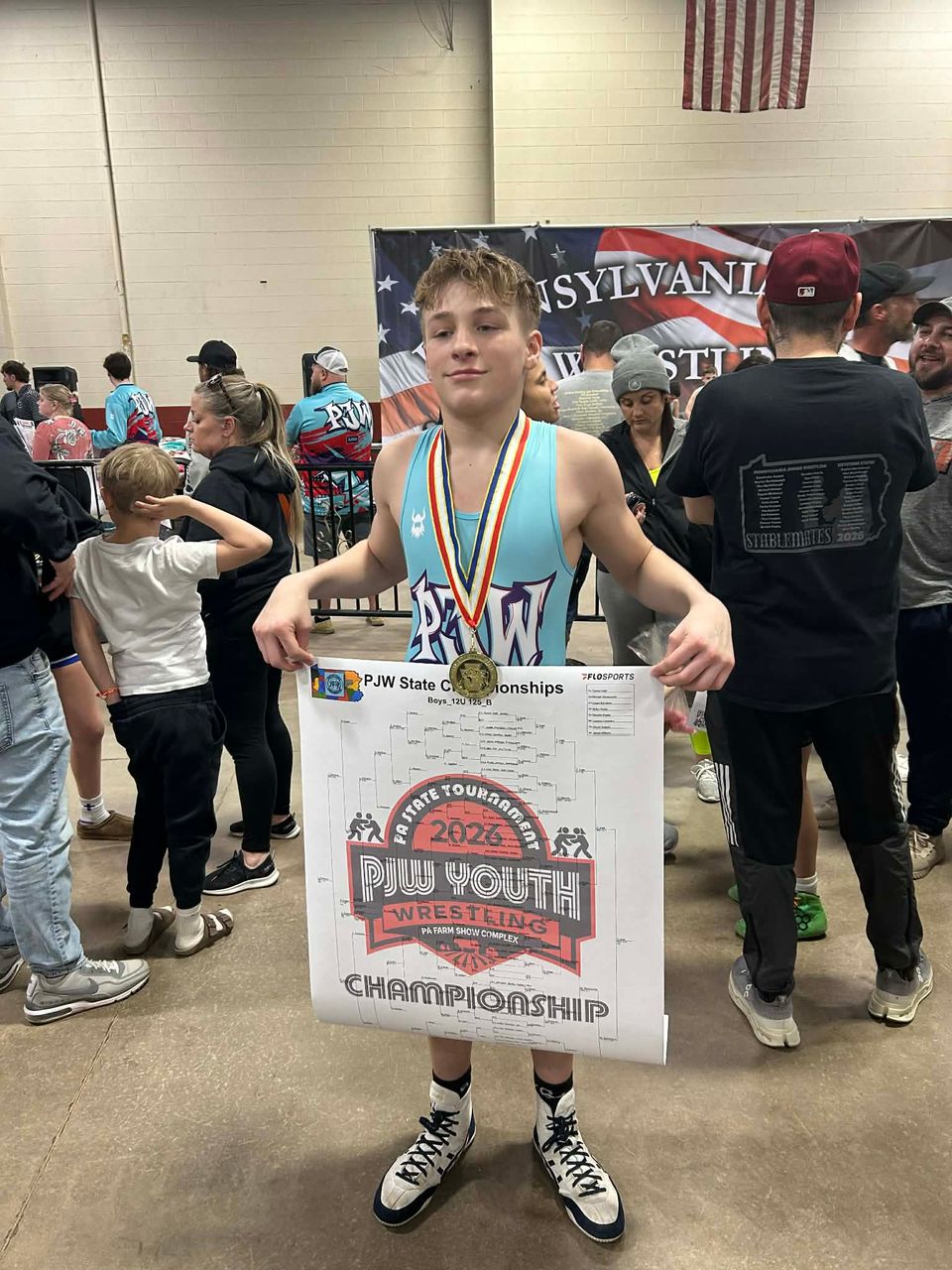
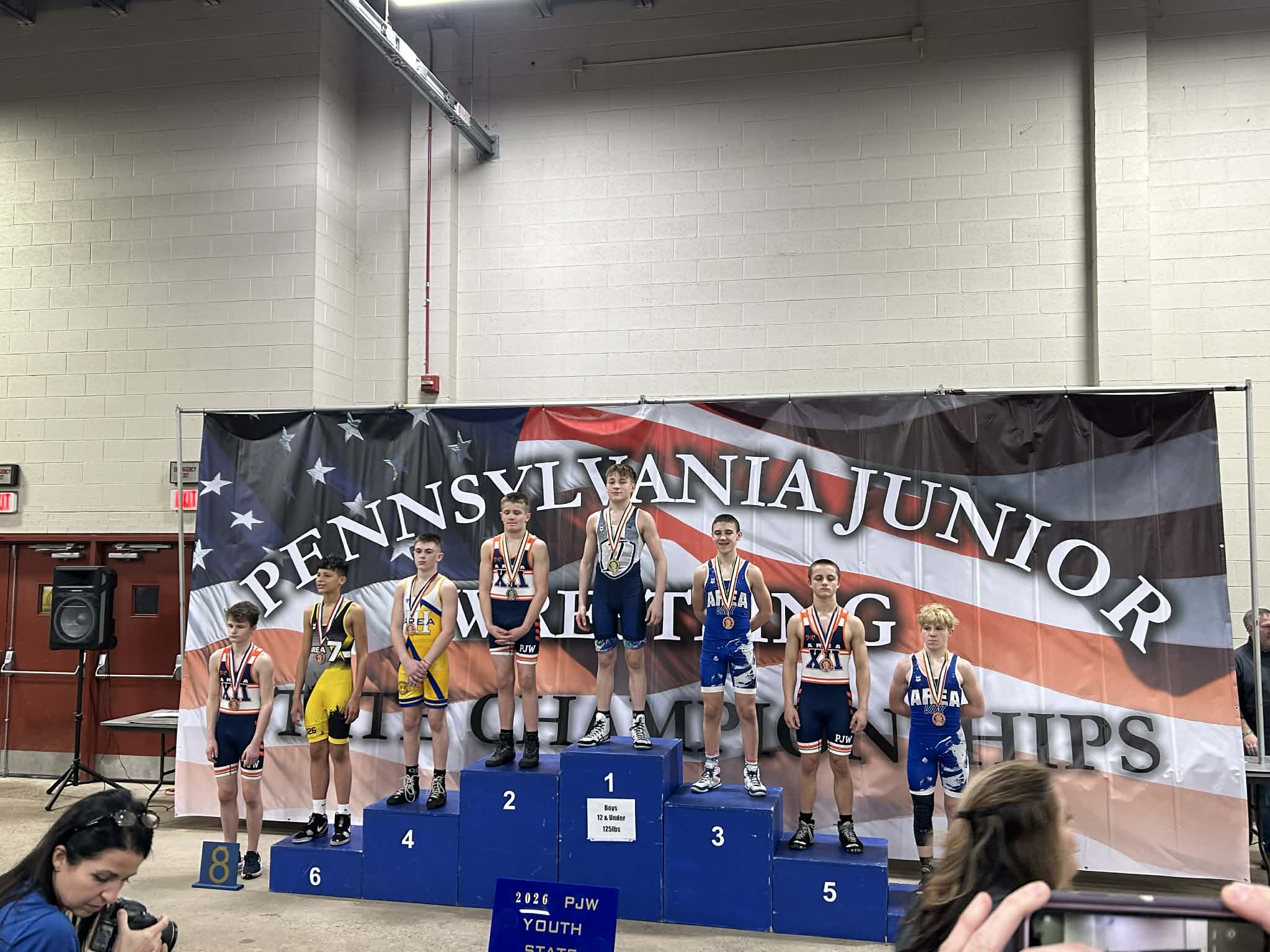
What Tanner accomplished this year stands as evidence that it worked. He won the Pennsylvania Junior Wrestling championship at 125 pounds. He won the Keystone State championship. Two titles most wrestlers his age spend years chasing without ever winning both in the same season.
When he talks about it, he comes back not to the medals but to the people. “All the coaches that put time into me,” he said, “and would push me when no one else was there.” He’s already learned winning is a collective act, that it draws from every person who stayed late and said, do it again. The scoreboard is only a record of what happened in practice six months ago.
The goals he’s set for the coming years have the specificity of a written contract. Win Tulsa nationals. Win Reno worlds. Place at Fargo nationals. And then high school, where the ambitions grow larger still: a four-time Pennsylvania state champion, a four-time Fargo champion, the top-ranked wrestler in the country, the kid that college coaches know by name. “A kid that people know is a hard-working person,” he said. “A person who is respected.”
That word arrives without fanfare in the middle of a list that could’ve been about rankings and titles. It tells you something about the architecture of his ambition. It has a moral dimension. What he’s building isn’t only a wrestling resume but a reputation, a way of being known that goes beyond what he’s accomplished.
When the nerves come before a big match, and he admits they do, Tanner doesn’t try to eliminate them. He changes what they mean. “I use those nerves as confidence,” he said, “and use that to my advantage.” That’s something a sports psychologist might spend months trying to teach a college athlete. Tanner arrived at it on his own, at thirteen, through whatever combination of faith and temperament made him who he is.
Which brings it back to the ritual. The cross. The initials. The finger pointed toward something above the gymnasium rafters. Tanner carries Cam Sweigart with him everywhere he competes, writes his name on the mat where the match is about to happen, and turns the competition itself into an act of remembrance.
There’s something in the gesture that goes beyond superstition or habit. It’s a way of saying this matters, I’m not out here for myself alone, that the people who shaped me and the faith that holds me are present in every step I take onto this mat.
He wants younger wrestlers to know they don’t have to be afraid. “Go out there and let it fly,” he said. “Be you.” Then he thanks God for the opportunities and the injuries he’s gotten through, thanks his coaches and his parents and everyone who’s supported him and says what he believes without embarrassment: that wrestling is the best sport in the world, and God put him here to do it.
Ryan Ingle watches all of this and keeps coming back to the same simple frame. Follow God and work hard. Tanner has absorbed it entirely. He writes it on the mat, points it toward the sky, and carries it into every match like the thing it is: not a slogan, but a way of life that’s already shaping the kind of man he’s becoming.
He’s thirteen. He’s got two state titles, a ritual, and a name he’ll keep writing on every mat he ever steps on.
Some kids grow into their potential. Tanner Ingle seems to be growing into something larger.



Member discussion