Jasper Shepps was hiding in plain sight
BY BRIAN CARSON
Every school has one.
The kid who could pick up a ball, any ball, and make the rest of the gym stop.
The kid who could run faster, jump higher, cut sharper, catch the ball better than everyone else, and make you feel, for one small and embarrassing second, that maybe you should have tried chess.
At Juniata High School, that kid was Jasper Shepps.
He was the one you watched with a little jealousy, then wonder, then the strange realization that you weren’t really mad at him anymore.
You wanted to be him.
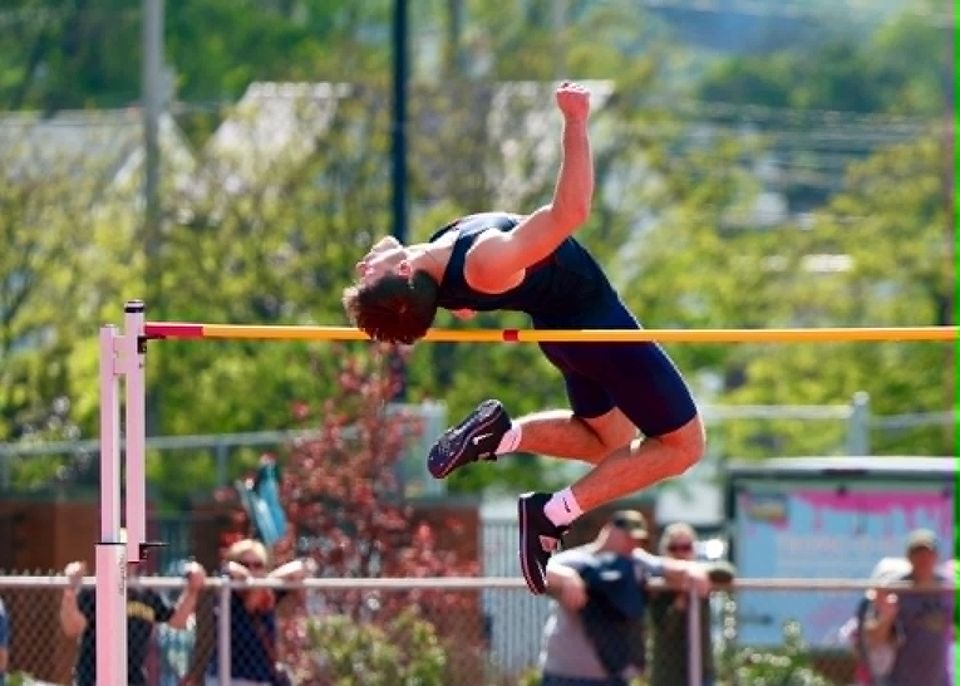
You wanted to know how it felt to rise above a high jump bar, pull down a rebound, catch a pass in traffic, skim through hurdles in the rain, and make all of it look like something he’d been doing since before he could tie his shoes.
And somehow, this kid was underrecruited.
Imagine that.
Imagine a 6-foot-1 athlete from Mifflintown becoming an all-state safety, a 1,000-point basketball scorer, a state high jump champion, a two-time state hurdles medalist, and a future Shippensburg University football and track athlete, and the larger recruiting world still needing convincing.
Imagine looking at a kid who once cleared 6 feet, 10 1/4 inches in the high jump and deciding he was easy to miss.
A steal?
Only if the right people weren’t watching.
Juniata watched.
The coaches watched. The teammates watched. The kids in the stands watched. The opponents watched, too, though they probably wished they could look away.
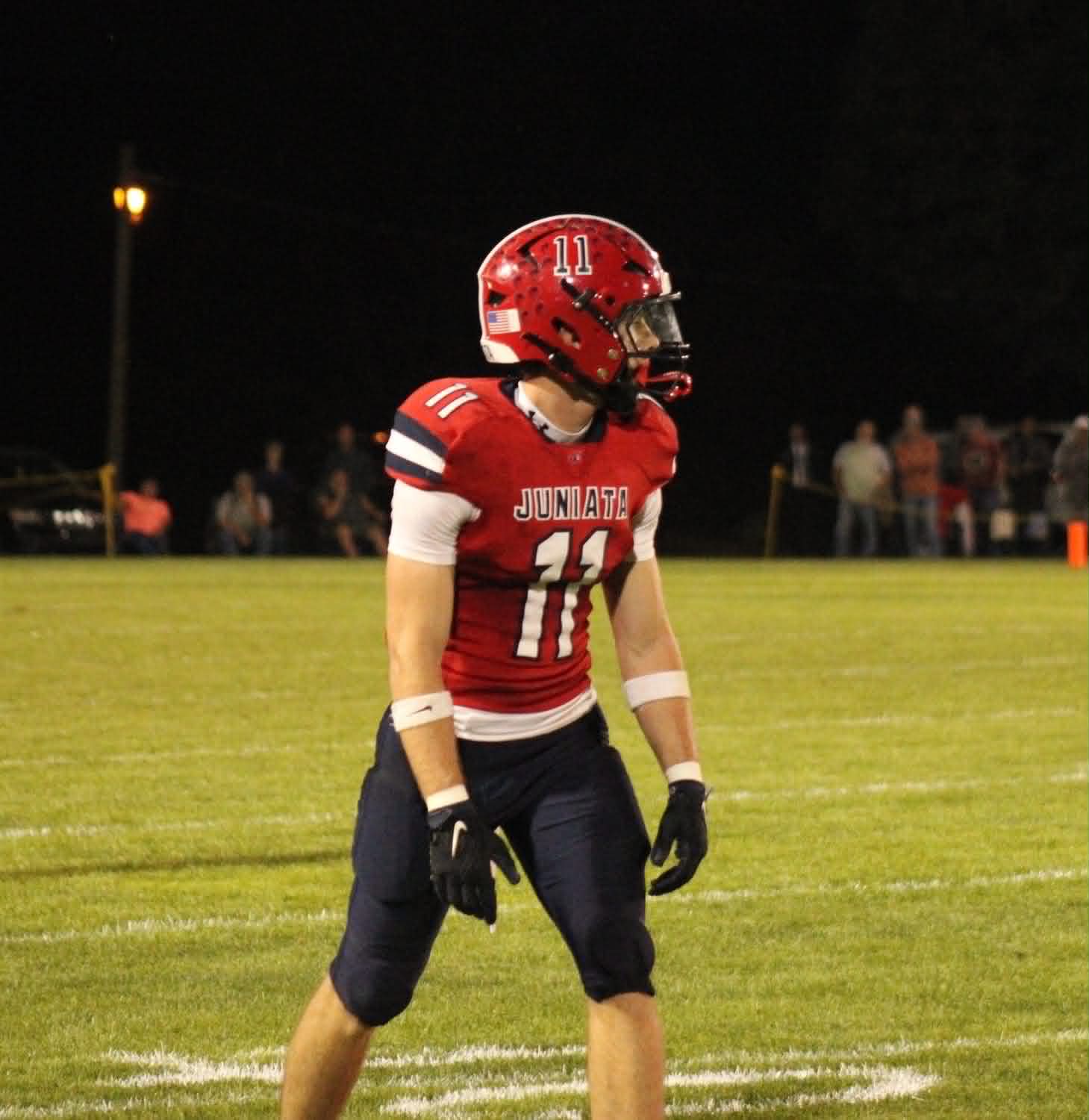
They saw Shepps on Friday nights, wearing No. 11, stretching the field as a receiver and closing it as a safety. They saw him catch passes, break on passes, make tackles and turn games with the kind of athletic burst that doesn’t need a long explanation.
They saw him on winter nights, scoring, rebounding, and defending for the basketball team. They saw him in spring, taking that same body and asking it to become something different.
A jumper.
A hurdler.
A one-man argument against small labels.
Shepps doesn’t talk like a kid who believes any of this was handed to him. He doesn’t sound impressed by his own résumé. Ask him when he first realized he could do what other kids couldn’t, and he doesn’t give you a scene from some childhood legend.
He gives you work.
“I think I first realized it early on when I was able to compete with kids older than me and hold my own, but I’ve never seen it as being naturally good at everything,” Shepps said. “A lot of it came from working hard all year round and always wanting to improve.”
That’s the part people miss when they see only the leap.
They see the ball in the air. They see the bar sitting high. They see the athlete rise through the rain at Shippensburg and assume it must be easy because it looked that way.
It wasn’t easy.
It was time management. It was pressure. It was a body that rarely got much of a break.
Football season rolled into basketball season. Basketball rolled into track. Track demanded a different kind of nerve. It meant staying ready when other teenagers were allowed to be tired.
“The hardest part people don’t see about being good at three sports is all the time management, pressure, and staying locked in physically and mentally all year round without much of a break,” Shepps said.
There it is.
The cost.
You don’t become this kind of athlete by being born spring-loaded. You don’t become this kind of athlete by showing up in March and deciding to jump. You don’t become this kind of athlete by enjoying Friday nights and forgetting the other afternoons, the weight room, the practices, the soreness, the expectations.
The best athletes in small schools carry a strange burden.
Everybody knows them.
Everybody expects.
Everybody watches.
At a large school, a kid can be one thing. At a small school, he may need to be the receiver, the safety, the punter, the scorer, the rebounder, the hurdler, the jumper, the leader, and the reason younger kids keep looking toward the field.
Shepps became all of that.
That’s why the underrecruited label feels insulting and fitting. Insulting because his production was right there. Fitting, because it gives this story its edge.
Shippensburg saw him.
Raiders football coach Mark “Mac” Long called Shepps an elite athlete, said he jumps out of the gym, and said Shippensburg felt it got a steal because Shepps was underrecruited.
That kind of quote can go two ways.
Some kids hear it and puff out their chests.
Shepps hears it and starts making a list.
“It means a lot hearing my coach say that,” Shepps said. “I think a lot of people overlooked me because of being from a small school. Hearing them say that motivates me to prove them right and prove the schools that passed on me wrong.”
Good.
Let him carry that.
Let him take it to Shippensburg. Let him bring it to a football field where everyone is older, bigger, and just as certain he belongs behind them in line. Let him bring it to the track, where the bar doesn’t care what county you came from, and the hurdles don’t care who recruited you.
The bar is honest.
That’s probably why Shepps chose the high jump when asked what moment best shows who he is as an athlete.
He could have picked football. He had the numbers. PA Football News listed him with 146 receptions, 2,805 receiving yards, 34 touchdowns and 23 interceptions in its player spotlight. He was a first-team All-State safety. He was a game-changing player on both sides of the ball.
He could have picked basketball. Scoring 1,000 points places a player in school memory. It gives him a number that hangs around long after the sneakers are gone.
Shepps picked the rain.
He picked the bar.
“I personally think my winning states in high jump show who I really am as an athlete,” Shepps said. “Football and basketball are team sports, so those moments are shared with everyone, but in track, it’s just you out there. You have to have a lot of discipline and mental toughness. Me winning the high jump at the highest level of high school sports, especially in the rain, shows a lot about who I am as an athlete.”
A kid from a small school.
A rainy track.
A bar at 6-5.
Nobody to throw him a pass. Nobody to set a screen. Nobody to make the tackle if he missed.
Just Shepps and the jump.
He won the PIAA Class 2A high jump championship at Shippensburg University with a leap of 6 feet, 5 inches. Then he added bronze medals in the 110 hurdles and 300 hurdles.
It was one last weekend that told the whole story.
The place where one chapter ends is the place where the next one begins.
Before that, at the District 6 Class 2A meet, he had cleared 6-10 1/4, a meet record and one of the top jumps in Pennsylvania. At the Roddick Invitational, he set school records in the high jump, 110 hurdles, and 300 hurdles on the same day.
There was the evidence.
There was the answer for anyone who wondered how good he really was.
He was good enough to change a football game.
Good enough to score 1,000 points on the basketball court.
Good enough to stand alone in the rain and become a state champion.
Still, Shepps doesn’t talk like someone trying to be remembered for the numbers first. Maybe that’s maturity. Maybe that’s the small-school part of him.
Maybe it’s the better answer.
“I hope people remember me as someone who worked hard, competed the right way, and cared about all the people around me,” Shepps said. “I’d want younger kids to feel like they could look up to me not just because of sports but because of how I carried myself.”
That’s how the best ones leave.
They leave behind records, sure. They leave medals. They leave game film. They leave old stories that grow larger every year.
Mostly, they leave a path.
For the next kid.
For the younger athlete standing near the fence, watching Shepps and feeling that old mix of jealousy and wonder. For the kid who wants to jump like that, run like that, catch like that, play like that. For the kid who doesn’t yet understand that the magic he’s watching is because of hard work.
Shepps knows he didn’t get here by himself.
“I want to thank everyone who has helped me, such as my family, coaches, teammates, teachers, and the community,” he said. “I’m very excited for what’s next at Shippensburg.”
He should be.
So should Shippensburg.
The Raiders say they got a steal.
Maybe they did.
Maybe they found a small-school athlete who was hiding in plain sight, above the rim, above the bar, above the doubts, above whatever limits other people placed on him because of where he played.
Juniata knew.
Now Shippensburg knows.
Soon enough, everyone else may know, too.
Every school has one.
Juniata had Jasper Shepps.




Member discussion